


Entry into and exit from the Russian Federation: what Ukrainian citizens need to know
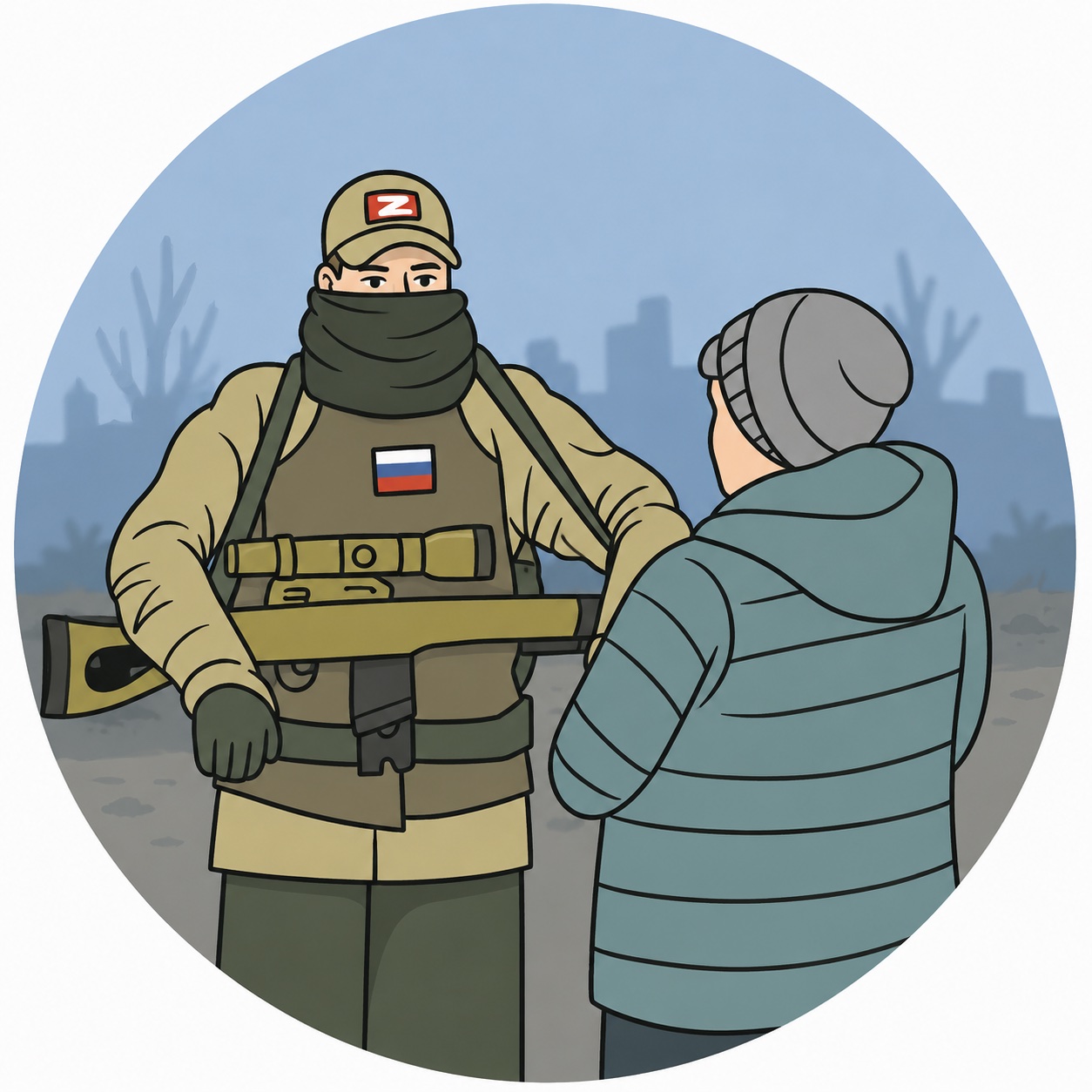
Since the start of the full-scale invasion, the rules governing entry into and exit from the Russian Federation for Ukrainian citizens have changed significantly. As of June 2022, the agreement between the Ukrainian and Russian governments on visa-free travel for Ukrainian and Russian citizens is no longer in force.
Entry of Ukrainian citizens into the Russian Federation is possible only through:
- the air checkpoint at Moscow Sheremetyevo Airport;
- the Ludonka road checkpoint (Pskov region).
In practice, crossing these checkpoints involves additional screening by Russian border guards and security services.
How do these checks take place?
They typically involve lengthy questioning, inspection of phones and social media — including photos, contacts, and correspondence — as well as the collection of biometric data. Devices may be confiscated.
The following groups face increased risk:
- men of conscription age;
- military personnel;
- civil servants;
- activists;
- individuals with a publicly expressed pro-Ukrainian position.
Risks when exiting temporarily occupied territories via Russia
A particular risk arises during so-called “filtration” of Ukrainian citizens exiting temporarily occupied territories through the Russian Federation. In border areas between temporarily occupied Ukrainian territories and Russia, Ukrainian citizens may be held in specially equipped facilities for screening and subjected to detailed questioning about links to the resistance movement, the Armed Forces of Ukraine, or special services, as well as participation in Ukrainian government bodies or volunteer activities. The duration of filtration procedures is not regulated.
Ukrainian citizens may be denied exit or detained without official explanation and without being granted the basic rights afforded to detainees.
The right to leave Russian territory formally remains, but in practice depends on the decision of border authorities. The primary document required is a valid international passport. If it has expired, the possibility of exit is decided on a case-by-case basis.
Forced passportization continues in temporarily occupied territories in violation of international law, creating additional risks, including military registration and potential conscription into the occupying army.
Preparing for the trip: action plan
1. Preparing your devices
The contents of your phone, tablet, or laptop constitute private information. Formally, you are not obliged to grant access to your device, but in practice legal safeguards may be ignored.
Before the trip
- Delete any content that may be interpreted as a pro-Ukrainian position or as “discrediting the armed forces of the Russian Federation”: photos and videos of military equipment, destruction, or military positions; correspondence about hostilities; subscriptions to Ukrainian military or political channels; participation in volunteer or administrative group chats.
- Clear app trash folders, cloud backups, and messenger caches.
- Do not delete all apps entirely: a phone that is too “empty” may also raise suspicion. Leave a minimal set of neutral apps and ordinary everyday correspondence. Delete sensitive content, not the apps themselves.
- Remove bookmarks, browsing and download history, and your browser cache.
- Check Telegram, WhatsApp, Signal, and other messengers — including archives, “saved messages,” hidden folders, and drafts — as well as file managers, PDFs, notes, and cloud storage.
- Enable two-factor authentication for all important accounts and change your passwords before departure.
- Disable fingerprint and Face ID unlocking: you may be physically forced to use biometrics. Use only a strong numeric or alphanumeric passcode.
- Disable automatic cloud synchronization, log out of accounts on secondary devices, and ensure that notifications are not displayed on the lock screen.
- If possible, use a separate, “clean” phone when crossing checkpoints or borders.
During inspection
- Do not unlock your device unless directly asked to.
- Do not enter passwords in public, under cameras, or in the presence of security personnel.
- Hand over devices fully powered off, not in sleep mode.
Important: during filtration, not only your device’s content but also your behavior is assessed. Remaining calm, avoiding sudden movements, and having properly prepared devices will reduce your risk far more than hurriedly deleting information immediately before inspection.
How to behave during questioning
- Remain calm and composed.
- Do not engage in arguments, discuss politics, make evaluative statements, or try to prove your point. Answer briefly, without unnecessary detail.
- Do not sign any protocols or statements without reading them first. If the text does not match your words, do not sign. Do not agree to wording that is imposed on you.
- If you feel a genuine threat of physical violence, prioritize preserving your life. In critical situations, choose behavior that minimizes escalation. The main goal is to pass the check and retain the ability to exit.
Remember that, formally, anyone in the Russian Federation has the right not to testify against themselves or close relatives (Article 51 of the Constitution of the Russian Federation). If needed, you may refuse to answer a specific question by citing this right. However, invoking legal rights does not guarantee they will be respected in practice.
Legal rights and actions in case of detention
Even in cases of forced evacuation, filtration, or detention, you formally have the right to notify relatives of your location and the right to a lawyer. Insist on the opportunity to make a call or send a short message indicating the place, date, and circumstances of your detention.
Before the trip, inform a trusted contact of your route, approximate checkpoint times, and border crossings. Agree on a schedule of regular check-ins after each stage. If contact is suddenly lost, that person should be able to promptly notify human rights defenders, lawyers, and Ukrainian authorities about a possible detention, along with the approximate time and place.
If a criminal case is initiated, you have the right to a lawyer. Record the lawyer’s contact details and pass your relatives’ contacts to them through the lawyer. Do not sign any documents without reviewing them and without a lawyer present.
Documents and migration status in the Russian Federation
Do not apply for any additional statuses in the Russian Federation (temporary asylum, temporary residence permit, refugee status) if you plan to leave later. These procedures involve surrendering your passport and being entered into Russian migration databases, which can complicate a quick exit.
A significant number of Ukrainian citizens in temporarily occupied territories have been forced to obtain Russian passports. Holding a Russian passport allows exit from Russia to countries that admit Russian citizens visa-free or under simplified procedures (including Belarus, Armenia, and Kazakhstan). In these countries, if Ukrainian documents are lost or expired, you can apply to a Ukrainian diplomatic mission for a Certificate of Return to Ukraine (a “white passport”). This document is issued for up to 30 days and allows return to Ukraine.
Protect your documents
- Avoid unnecessary marks, statements, or “voluntary” applications.
- Do not hand over Ukrainian documents without a direct legal requirement to do so.
- Keep them separately and do not disclose their existence if there is a risk of confiscation.
If you have a valid Ukrainian international passport, use it to travel to third countries. Some states do not permit entry with an internal passport only, and Russian border guards may deny exit without a document valid for international travel.
The goal is to minimize contact with Russian migration authorities, avoid leaving additional legal traces, and ensure you can leave as
How to leave Russia
After entering the Russian Federation, plan your exit route immediately. If possible, decline transfer to so-called “temporary accommodation centers” on Russian territory. Staying there means additional oversight by migration authorities and makes a quick departure more difficult.
There is no formal general ban on Ukrainian citizens leaving Russia, but decisions are made individually by border authorities. The longer your stay and the more contact you have with migration structures, the higher the risk of complications.
The optimal strategy is to leave for a third country and then return to Ukraine or relocate to an EU country. In EU countries, Ukrainian citizens are granted temporary protection (under EU Council Decision 2022/382), which provides the right to residence, access to healthcare, employment, and social assistance. Obtaining this status is not mandatory immediately upon entry — you can first decide on your country of stay.
A biometric or valid Ukrainian international passport allows visa-free entry to most EU countries. Some routes are possible via Belarus or other countries that maintain connections with Russia. Check transit conditions in advance.
If your Ukrainian international passport is missing or expired and you have no Russian passport, direct exit from Russia to the EU is often not possible. In this case, consider traveling to a third country where you can apply to a Ukrainian consular office for a Certificate of Return.
The key principle is to minimize time spent in Russia, avoid obtaining additional statuses, and plan your route to a safe location in advance.
Exit routes from Russia
Currently, viable exit options depend on the documents you hold. Routes may include travel via Belarus.
Towards Poland
- Brest (Belarus) — Terespol (Poland): open to all passengers, buses, private cars, and freight transport.
- Bruzgi (Belarus) — Kuźnica Białostocka (Poland): open only to passenger cars (private cars and taxis). Not open to buses or freight transport.
- Berestovitsa (Belarus) — Bobrowniki (Poland): open to all passengers, buses, private cars, and freight transport.
Towards Lithuania
- Kamenny Log (Belarus) — Medininkai (Lithuania): open to freight and passenger cars.
- Benyakoni (Belarus) — Šalčininkai (Lithuania): open to freight and passenger cars.
The choice of route depends on your documents.
Choosing an exit option
- If you have a Russian passport (including one obtained under coercion):
A realistic route is to leave Russia for third countries that admit Russian citizens visa-free or under simplified procedures (e.g., Armenia, Kazakhstan, Belarus, Turkey — air connections with Russia are maintained). After reaching a safe location, you can apply to a Ukrainian consular office for a Certificate of Return (“white passport”) if your Ukrainian documents are missing or expired. This is the most stable option, as it does not depend on changing conditions at land border crossings between Russia and the EU. - If you have a valid Ukrainian international passport (biometric or non-biometric):
You may leave Russia directly by air to third countries (Turkey, Armenia, Kazakhstan, UAE, etc.), then travel to the EU and return to Ukraine. Land exit to certain neighboring countries is also possible, depending on the operational status of border crossings on the day of travel. A valid Ukrainian international passport allows visa-free entry to EU countries for short stays.
Key condition: check the status of specific checkpoints or flights immediately before departure. - If your Ukrainian documents are expired or absent and you have no Russian passport:
The most practical option is to travel to a third country that permits entry with available documents (e.g., an internal Ukrainian passport, if accepted, or another identity document), then apply for a Certificate of Return at a Ukrainian consulate. Direct travel to the EU without a valid international passport is generally not possible.
Important: in all scenarios, minimize your time in Russia, avoid obtaining additional migration statuses, and plan your route in advance based on current transit rules.
Money, tickets, and currency exchange in Russia
Tickets
When purchasing tickets (train, bus, or plane), enter your full name carefully and exactly as it appears in the document you will use to cross the border. Any discrepancy may result in denial of boarding.
Mobile communication
- A SIM card in Russia can only be purchased in person with identity documents. It is registered to a specific individual, with data entered into official registers. Anonymous purchase is not possible.
- Ukrainian SIM cards do not work in Russia, and Russian SIM cards do not work in Ukraine.
- Plan your communication in advance: arrange check-in times with a trusted contact via Wi-Fi or after reaching a third country.
- If your phone supports eSIM, you can install an app such as SimOptions or another international eSIM service and purchase a digital SIM card from a third country. This allows access to mobile internet both in Russia and immediately after leaving or during transit, without needing a physical SIM card.
Currency and funds
- Cash US dollars and euros can be exchanged in Russia without major issues.
- Exchange of hryvnia is limited and unreliable, so it should not be relied upon.
- It is best to carry a reserve of cash in a foreign currency and a bank card that works reliably outside the Russian Federation.
Important information for the media, bloggers and all citizens who photograph or write about war and the army
What is categorically prohibited to be covered by the mass media during wartime:
- names of bases and subdivisions, as well as their locations
- the number of soldiers in bases and units
- the number of weapons and equipment, their condition and place of storage
- conditional marks of objects
Any information about:
- operations carried out or planned
- system of protection and defense of military units
- available military protection such as: weapons and equipment(except visible or obviously expressed)
- procedure for engaging forces (military) and facilities (weapons)
- intelligence gathering
- movement and deployment of troops (names, numbers, routes)
- military units and their tactics, methods of action
- unique operations and their execution methods
- the effectiveness of the enemy’s electronic warfare
- postponed or canceled operations
- missing or crashed aircraft, ship and search and rescue operations
- plans for the security of our troops (disinformation, camouflage, countermeasures)
- informational and psychological operations carried out or planned
- propaganda or justification of russia’s large-scale armed aggression against Ukraine.
Do not post on social media:
- consequences of hits by enemy’s missiles or projectiles or moments of their flight in the sky. By doing so you will help the enemy to adjust the fire.
- time and place of “hits” (neither in publications nor in comments)
- information about the work of the Ukrainian Air Defense Forces
- a photo showing numbers, special markings and markings on destroyed or downed enemy equipment.
- unverified information about victims or dead.
